Civotec LLC recently completed a Traffic Impact Analysis (TIA) for a proposed new elementary school development in East Texas, within the TxDOT Beaumont District. This project showcases our team’s expertise in school-related traffic engineering and our commitment to safe, data-driven transportation planning for educational facilities across Texas.
Project Overview
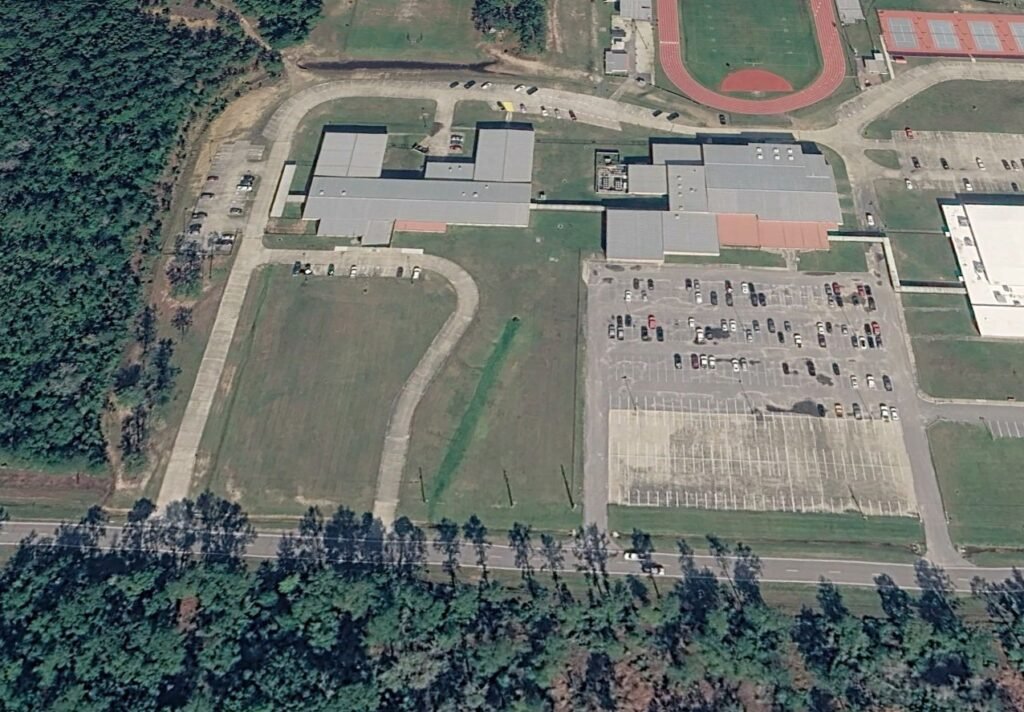
The proposed development consists of a new elementary school of approximately 61,050 square feet, designed to serve approximately 313 students (Pre-Kindergarten through Grade 2) and 50 staff members. The school is located along a Farm-to-Market road in Hardin County, Texas, within the TxDOT Beaumont District, and is expected to open in 2027.
Civotec coordinated closely with TxDOT Beaumont District from the outset, beginning with a formal scope meeting to define study parameters in accordance with TxDOT’s Traffic and Safety Analysis Procedures (TSAP) Manual. This level of early agency coordination ensures that the study methodology is aligned with state requirements before fieldwork begins, saving time and reducing the risk of scope revisions later in the process.
Traffic Study Methodology
Our analysis followed rigorous industry standards and applicable guidelines, including the ITE Trip Generation Manual (12th Edition, Land Use Code 520 – Elementary School), the Highway Capacity Manual (HCM) 7th Edition, the TxDOT Access Management Manual (AMM), and the TxDOT Roadway Design Manual.
Field traffic counts were conducted at key study intersections to capture real-world turning movement data. Future traffic volumes were projected for the 2027 opening year by applying a 2% annual background growth rate to existing counts. The field data collection phase is critical: it grounds the analysis in actual observed conditions rather than relying solely on regional models or historical estimates.
Based on ITE methodology, the proposed school is estimated to generate approximately 232 total trips during the AM peak hour and 138 total trips during the PM peak hour, consistent with an elementary school of this enrollment size. These figures were then distributed across the surrounding road network based on observed turning movement patterns.
Capacity and Level of Service Results
Civotec performed capacity analyses using Synchro Studio Version 12 following HCM 7th Edition methodology across three scenarios: 2026 Existing, 2027 Future No-Build, and 2027 Future Build conditions. Evaluating all three scenarios side by side allows decision-makers to clearly see how much of the projected traffic growth is attributable to the project versus background growth that would occur regardless of the development.
All study intersections are projected to operate at acceptable Level of Service (LOS A through D) under all scenarios during both AM and PM peak hours. The proposed development results in only modest increases in control delay at existing intersections, a strong outcome for the surrounding road network and community. The worst operating condition under the Build scenario occurs at the SH 326 and FM 1293 intersection, where select approaches reach LOS C during peak hours, still within the acceptable range.
Queue and Driveway Access Analysis
A detailed queue analysis was performed at the school’s primary parent drop-off/pick-up driveway using a D/D/1 cumulative arrival-departure methodology. The analysis evaluated three operational scenarios: exclusive elementary use, concurrent use with the adjacent campus, and a 30-minute staggered schedule between user groups.
Results show that vehicle queues remain within on-site storage capacity across all scenarios. However, under concurrent use with the adjacent campus, queue lengths approach storage capacity during the AM peak hour, highlighting the importance of operational coordination between the two schools. The proposed access configuration includes two full-access driveways: one for parent drop-off/pick-up and one dedicated to school bus operations, with on-site storage for up to 24 buses. To maximize safety and efficiency, Civotec recommended designating the primary driveway exclusively for the new elementary school, implementing a 30-minute staggered drop-off and pick-up schedule as a contingency measure if shared access is required, and directing school bus traffic to a separate dedicated driveway to eliminate conflicts with parent vehicles.
Safety and Crash History Analysis
A five-year crash analysis (2021 to 2025) was conducted along a 3.2-mile study segment centered on the project site. Only five reportable crashes occurred during this period, yielding a crash rate approximately 75% below the TxDOT statewide average, confirming this as a low-crash corridor. No fatal or serious injury crashes were recorded during the study period.
This safety baseline is an important finding. It means the proposed development is being introduced into a corridor that already performs well from a safety perspective, and the mitigation measures recommended by Civotec are designed to maintain that record as school-related traffic is added to the network.
Mitigation Measures and Recommendations
Based on engineering findings, Civotec developed a set of practical mitigation measures to ensure safe school zone operations at opening. The key recommendation is to reduce the school zone speed limit to 25 mph along the adjacent Farm-to-Market road. This single measure simultaneously resolves the deceleration lane length shortfall at the primary driveway and brings driveway spacing into conformance with TxDOT Access Management Manual minimums, making it a highly efficient and cost-effective solution.
Additional recommendations include designating the primary driveway exclusively for the new elementary school with existing campus traffic redirected to eastern driveways, implementing staggered drop-off and pick-up schedules between the new school and the adjacent campus if exclusive driveway designation is not operationally feasible, providing standard school zone signage and pavement markings, and field-verifying sight distance at both driveways prior to the 2027 school opening.
Coordinating with TxDOT: What It Takes
One aspect of this project that reflects Civotec’s approach to TIA work is the early and sustained coordination with TxDOT Beaumont District. The study was formally scoped through TxDOT’s Traffic Engineering Study Form 2534, and a scope meeting was conducted prior to any fieldwork. This process is required for developments that access state highways, and navigating it efficiently requires familiarity with TxDOT’s internal procedures and staff expectations.
Civotec’s experience working within TxDOT’s review framework means our reports are structured to address reviewer concerns proactively, reducing back-and-forth and keeping projects on schedule. For school districts and developers operating under tight construction timelines, this matters.
Why Traffic Impact Analysis Matters for Schools
Elementary schools generate concentrated traffic surges during morning arrival and afternoon dismissal, often the most congested windows of the day in any neighborhood. A thorough TIA ensures that the surrounding road network can safely absorb new traffic demand, that driveway geometry meets state design standards, and that school zones are properly configured before a single student arrives.
Beyond compliance, a well-executed TIA is a planning tool. It helps school districts and their design teams make informed decisions about driveway placement, on-site circulation, bus staging, and parent queuing well before construction begins, when changes are still inexpensive to make. The cost of redesigning a driveway after a school opens is far greater than getting it right in the planning phase.
Civotec specializes in Traffic Impact Analysis studies for a wide range of development types across Texas, including K-12 schools, higher education campuses, residential subdivisions, commercial centers, and industrial facilities. All studies are coordinated directly with TxDOT and local municipalities to meet applicable state and local standards.
Partner with Civotec for Your Next Traffic Study
Planning a new school, campus expansion, or any development requiring a TIA in Texas? Civotec’s licensed traffic engineers bring the technical depth and agency coordination experience to move your project forward efficiently and compliantly. Contact us today to get started.